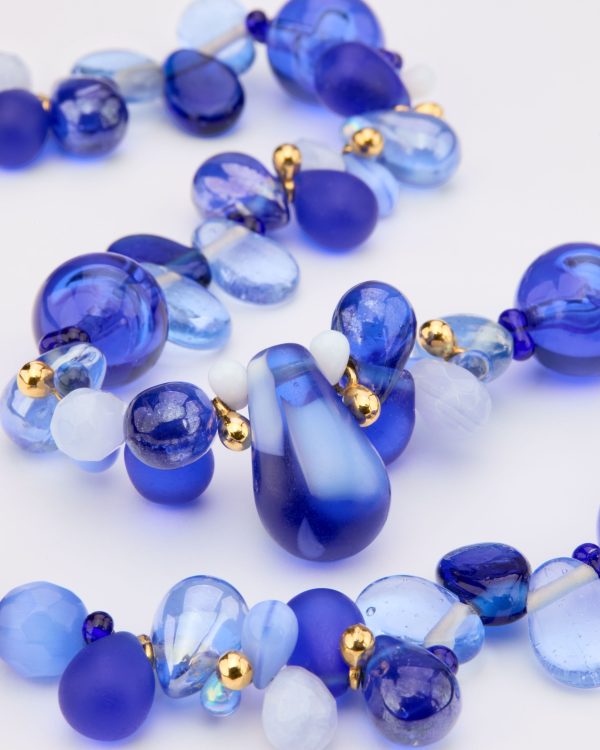
Mali Wedding Beads
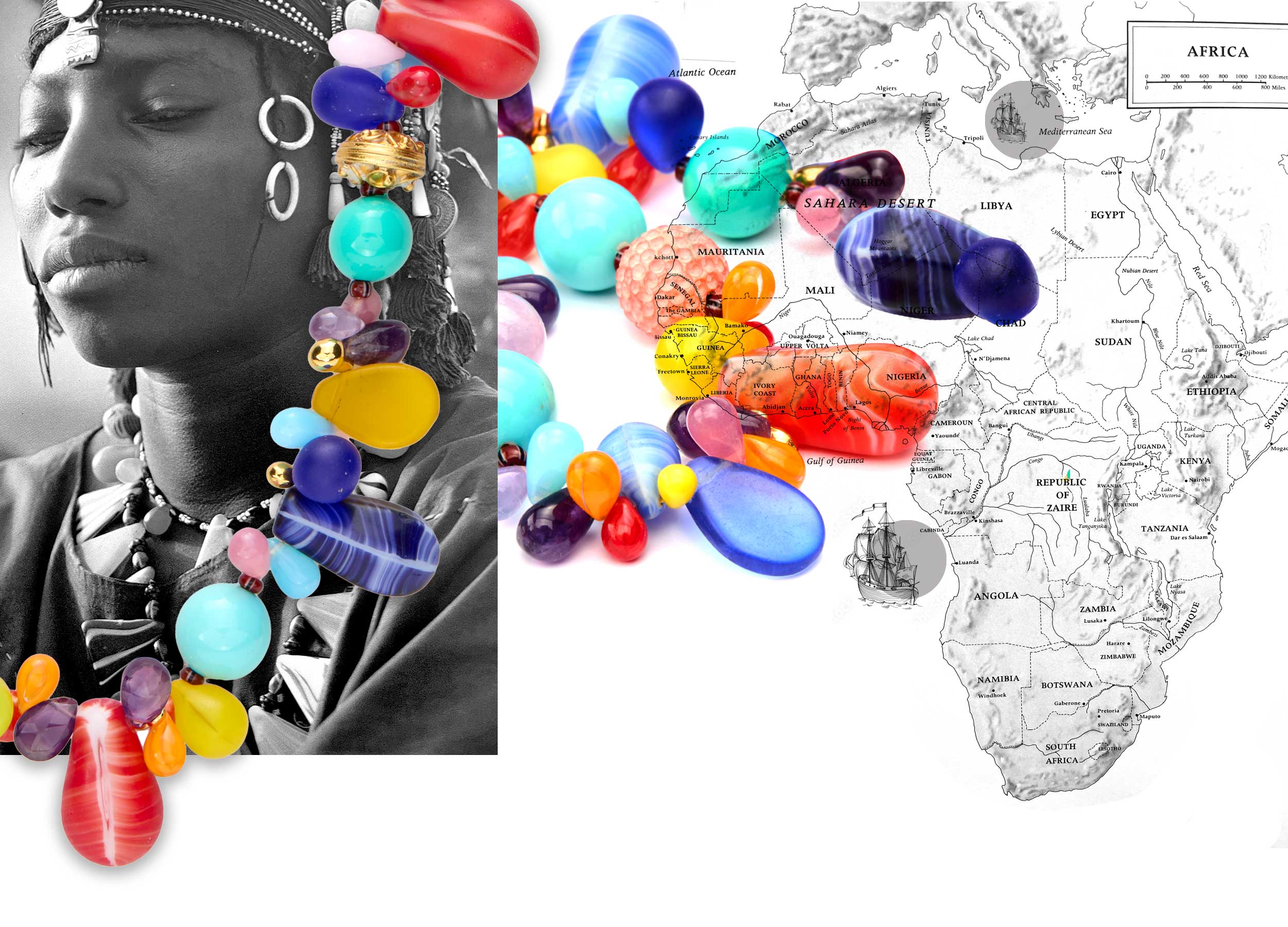
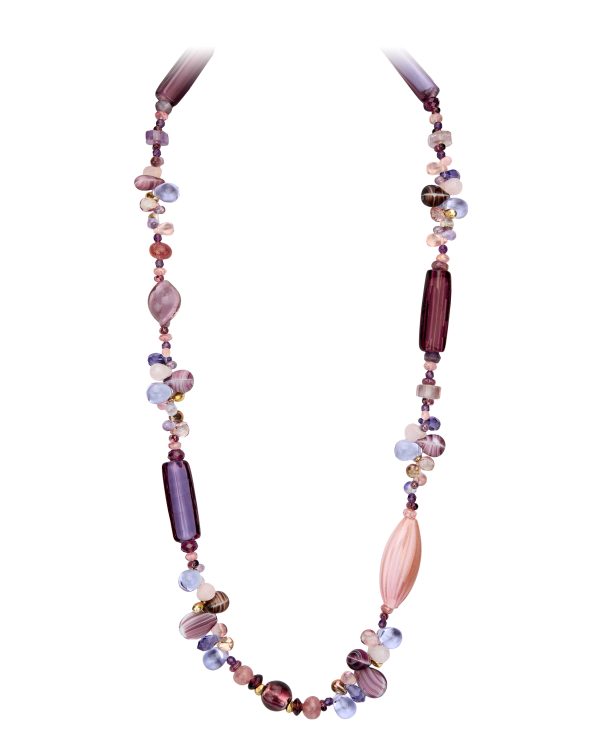
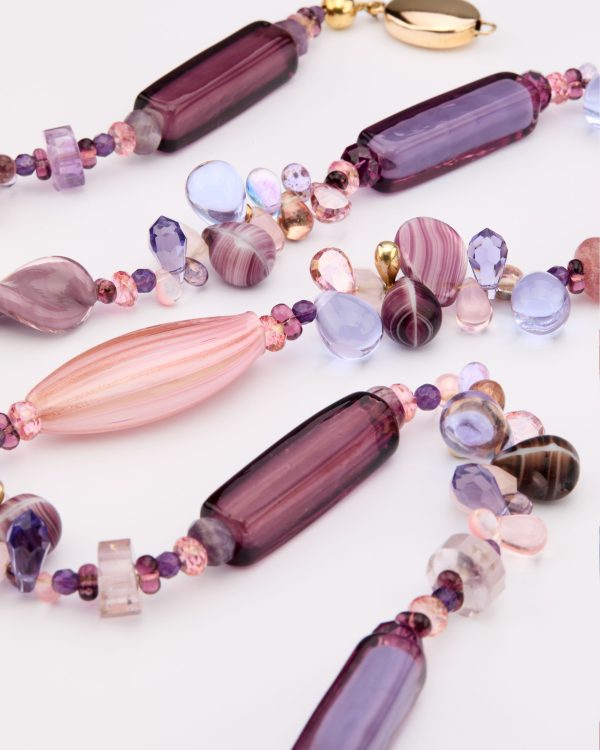
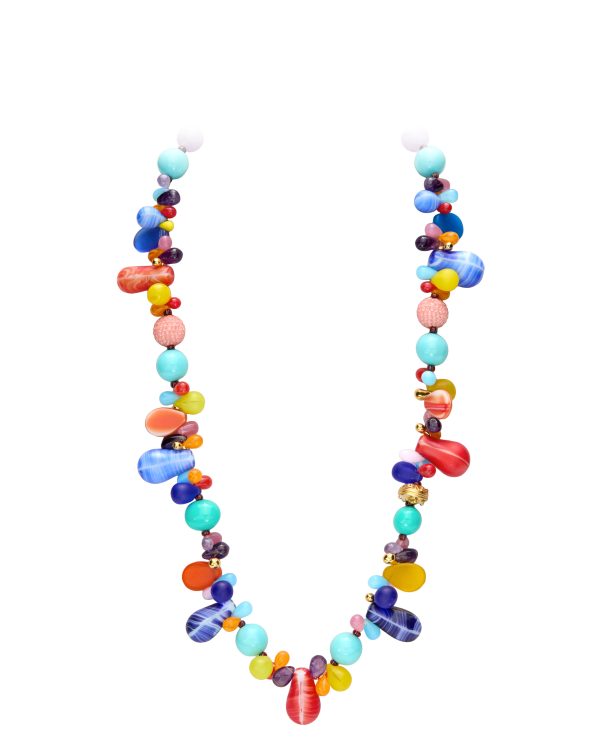
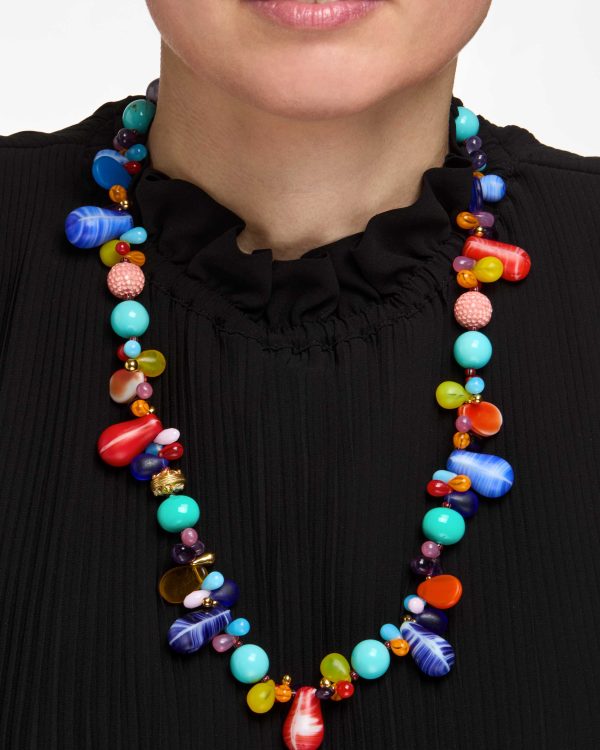
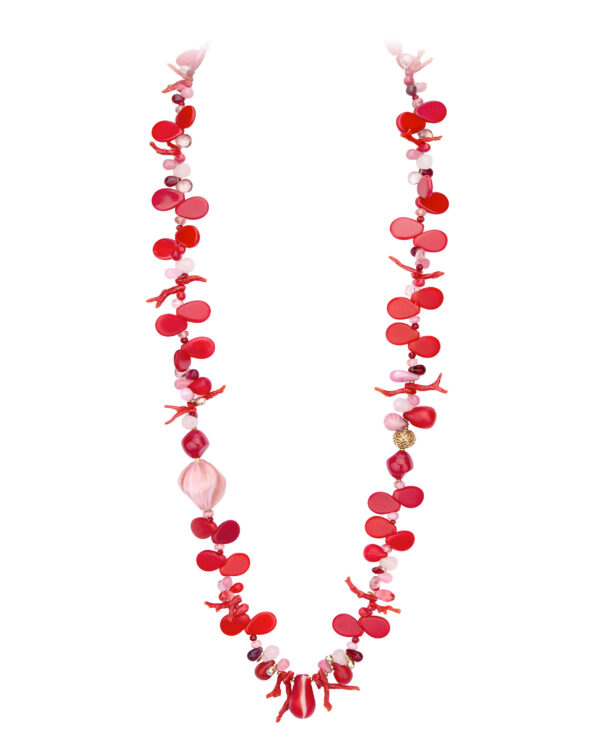
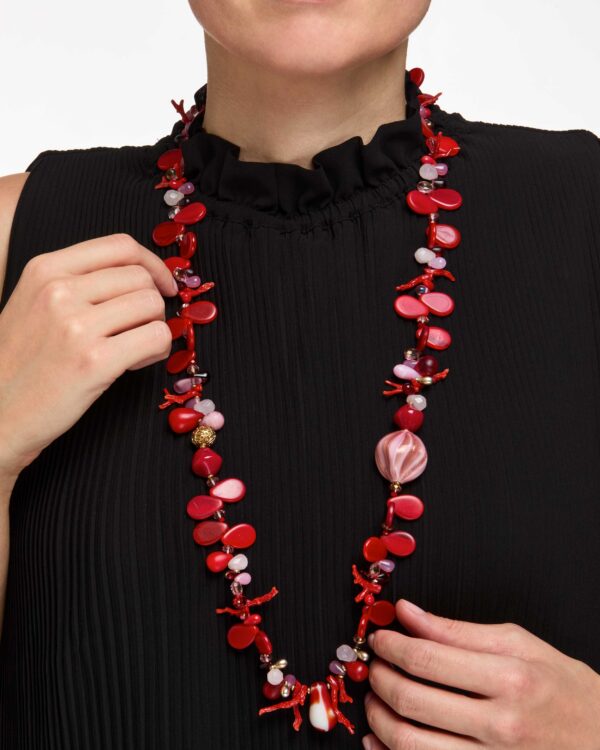
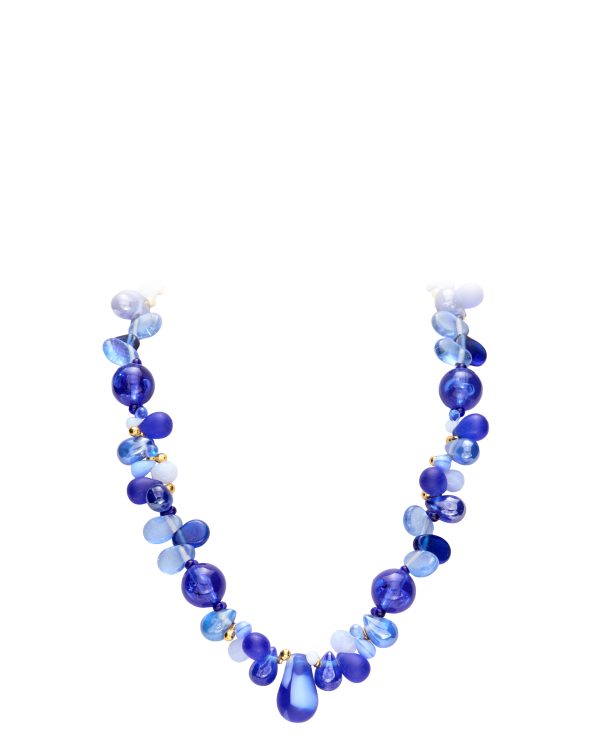
A large variety of colorful glass beads molded into the shape of lightbulbs, triangles and feline claws were mass-produced in the 1800s-1900s in what was formerly known as Bohemia, today’s Czech Republic. They are an invaluable vestige of the grievous history of trade between Europe and West Africa wherein Europeans bartered glass beads for coveted West African resources and even enslaved people. Renowned for their opaque color or dotting effects that resembles porcelain, these beads were prized for their beauty and solidity by the Fulani people of Mali. Evocative of fertility, brides wore them on their wedding day. Included in their dowries the precious individual beads could be used in exchanges as currency, or traded goods. Each neckpiece of this collection is a medley of unique Bohemian pressed beads and modern Murano beads, various semi-precious stones interspersed with silver and gold-plated beads strung together in joyful chromatic clusters.