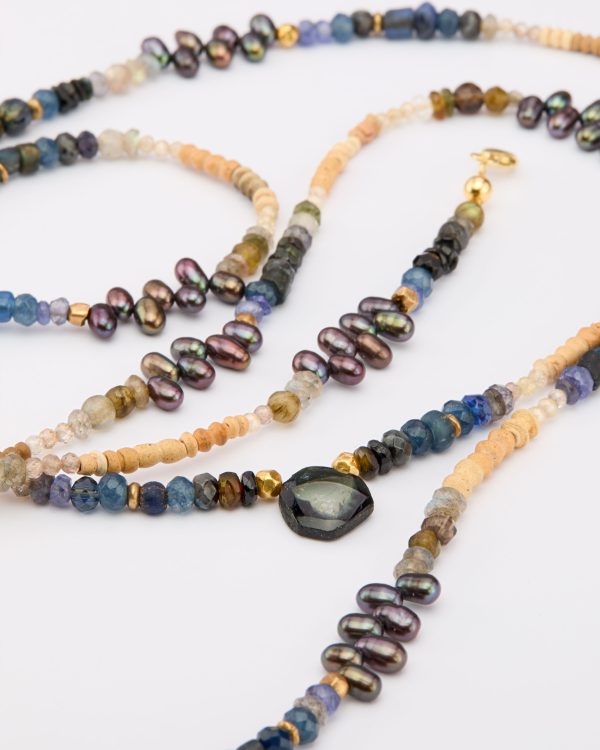
Ancient Djenné / Nila faience bead
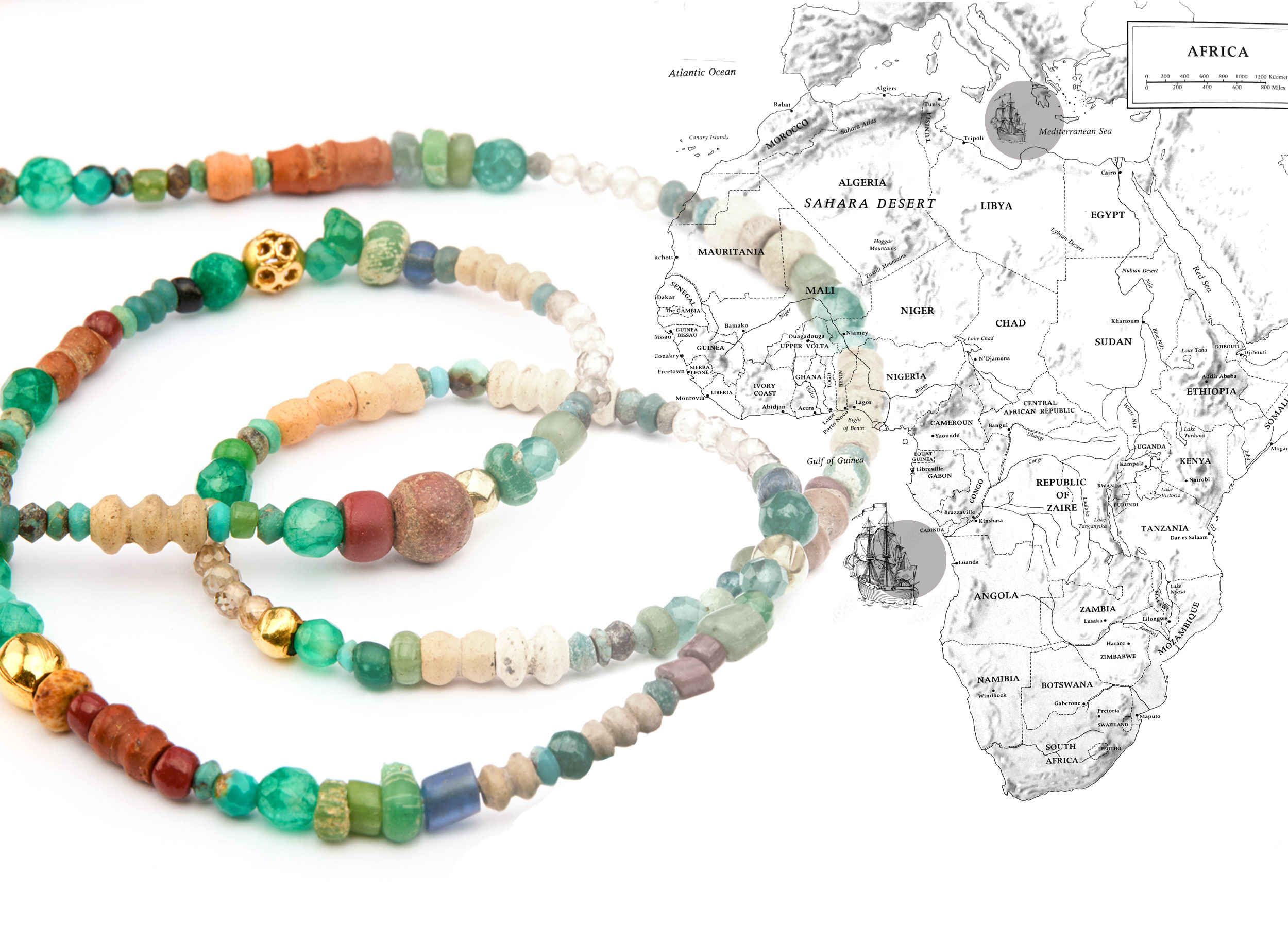
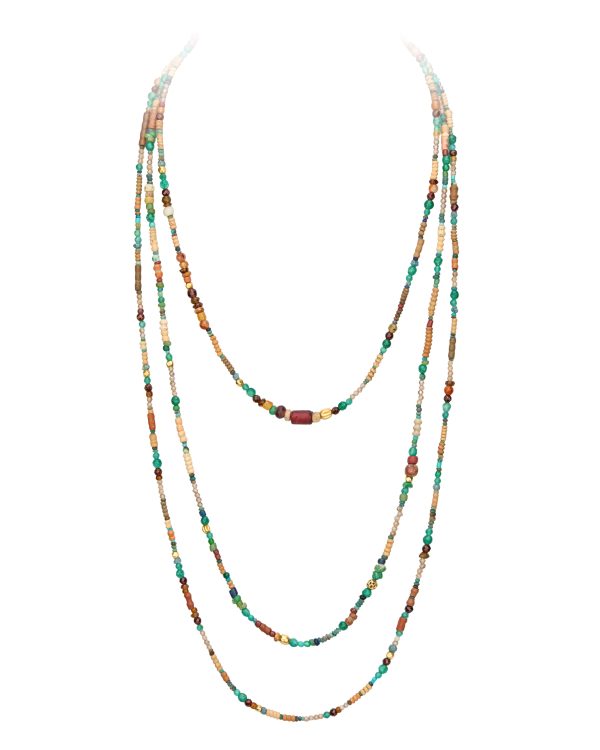
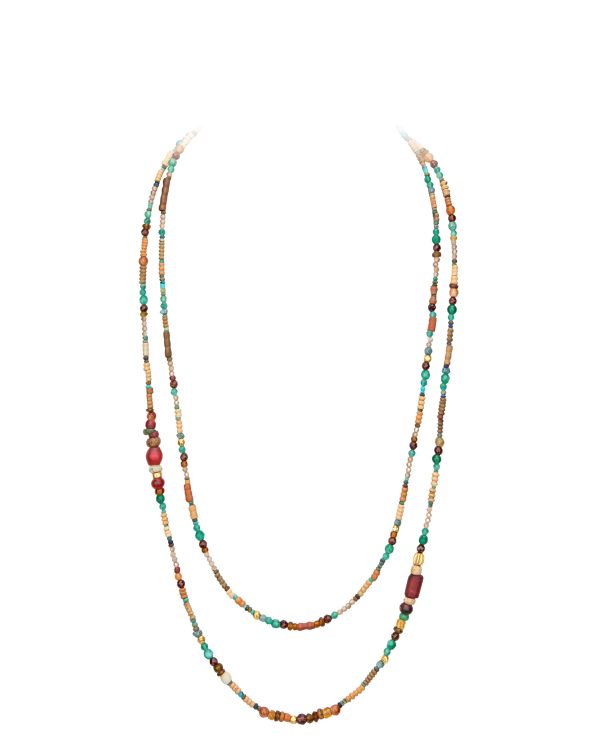
Nila (meaning blue) faience beads were recovered from Mali, notably in the Djenné region which comprises one of the oldest trading routes in sub-Saharan Africa, a vital crossroads for the gold and salt trade. Still today the exact origins and datation of these beads remains uncertain. Either the glass beads arrived at the gateway to the Mediterranean by way of Indian merchants along the Silk Road, or the ancient beads came from Persia or Egypt during the period of Islamic expansion in the 12th and 13th centuries. The beads have a matte finish because they were buried under sand for centuries and as such are sometimes called “dig beads.” The coloring of these stunning beads comes out when they are buffed with a spot of olive oil. Terracotta beads from Mali are genuine archaeological artefacts dating back more than 500 years. Made from fired clay these durable beads come in a variety of shapes and sizes. Their frequent discovery in tombs highlights their importance in burial practices.